




Singapore to roll out mass emergency alerts to mobile phones from May, starting with Singtel users
Known as SG Alert, the emergency broadcast system will include StarHub users by end-2026, and M1 and Simba by mid-2027.
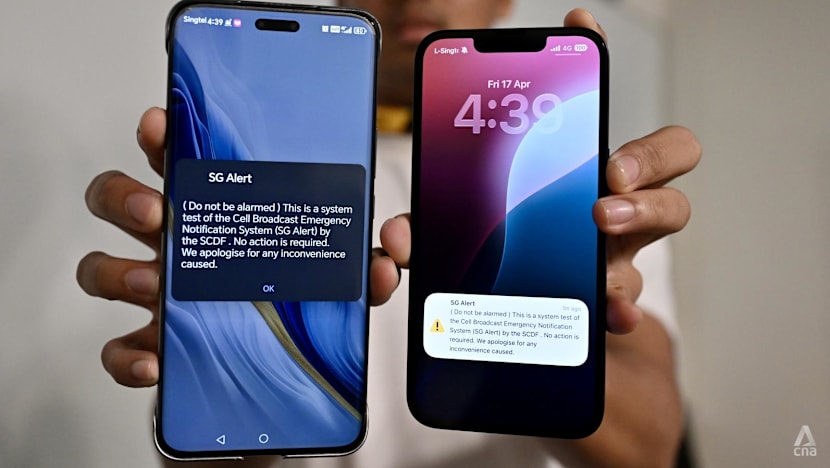
The new mass emergency alert system SG Alert, which will be used during emergencies such as major fires, chemical or terror incidents, seen on an Apple and Android device on Apr 17, 2026. (Photo: 草莓传媒/Jeremy Long)

This audio is generated by an AI tool.


SINGAPORE: A new mass emergency alert system that can bypass high network traffic and silent mode settings to inform the public of serious incidents will be progressively rolled out to mobile phones in May, starting with Singtel users.
Known as SG Alert, the emergency broadcast system is designed to rapidly notify the public of major fires, terror threats and other dangers.
It will subsequently expand to StarHub users by the end of 2026, followed by M1 and Simba users by mid-2027, said the Singapore Civil Defence Force (SCDF) on Friday (Apr 17).
This timeline also applies to those subscribed to mobile virtual network operators, which lease network space from these telcos.
To "validate the system's performance", SCDF will conduct an islandwide public testing for Singtel network users on May 10 at 12pm. More information on the testing will be shared closer to the date.





SG Alert was launched in partnership with the Home Team Science and Technology Agency (HTX), the Infocomm Media Development Authority (IMDA) and Singtel.
It uses cell broadcast technology based on international standards, which allows multiple, simultaneous messages to be delivered via local mobile cellular networks without requiring any personal information to be collected, SCDF said in a media factsheet.
The alerts operate independently of mobile data services, so they can still be sent out even during periods of network congestion or peak demand, it added.
"By enabling alerts to be broadcast islandwide or within specific geographical zones, the system strengthens Singapore's emergency communications framework with secure, fast and reliable mobile outreach."
Unlike the SGSecure app, SG Alert does not require the user to install any mobile application.
Once rolled out after May 10, Singtel users will receive SG Alert messages during emergencies, while those using other mobile network operators will continue to receive SMS alerts. Unlike SG Alert messages, SMS messages do not have special notification tones and are not able to bypass silent mode settings.
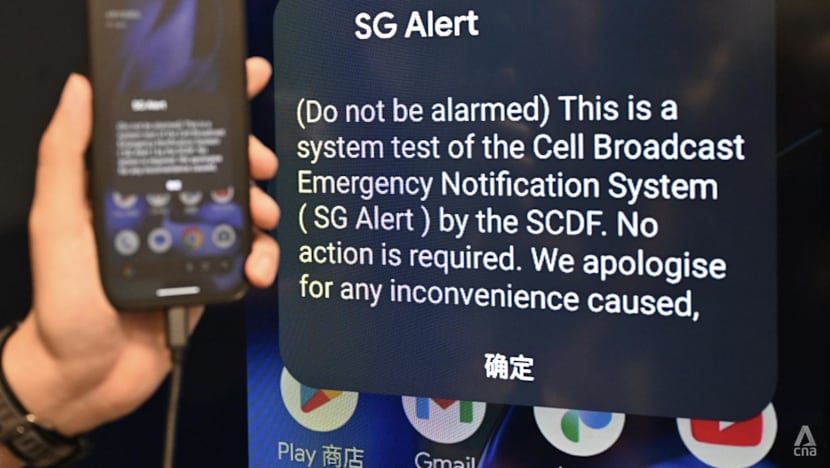
SCDF and the Singapore Police Force will be tasked with sending SG Alert messages.
SCDF said that the system complements existing emergency communications platforms, such as its public warning system which uses a network of sirens to alert the public to attacks from the air, land or sea, as well as natural and other man-made disasters.
Other channels include free-to-air television and radio broadcasts, social media platforms, the SGSecure mobile app, Singapore鈥檚 community response to terrorism threats, and the myResponder app, which alerts members of the public to nearby fire and medical cases.
Platforms such as the SGSecure app are still relevant as they cover a wider set of functions, providing public education messages or scam alerts beyond notifications on emergencies, said an SCDF spokesperson.
The emergency alert system was previously announced by Minister for Law and Second Minister for Home Affairs Edwin Tong in August 2025. It was also brought up during the Ministry of Home Affairs' Budget 2026 debate in February.
Mr Tong said in a speech last year that the alert system was part of efforts to leverage innovation in disaster management to effectively disseminate emergency messages to the public.
HOW IT WORKS
SG Alert will only be activated during emergencies such as major fires, chemical or terror incidents that require the public to take immediate action to protect themselves, said SCDF.
Upon receiving the alert, members of the public should read the message carefully and follow the instructions given.
The message will contain key information relating to the emergency - a brief description of the incident, the affected location or locations, protective actions to take and official sources and links for more details.
By using cell broadcast technology, the emergency alerts can reach the public "within seconds", said SCDF.
All mobile devices will need to be updated to the latest operating system (OS) to ensure uninterrupted access to SG Alert.
More specifically, it is only supported on phones running on the latest Apple iOS 26.4 and later, or Android OS 12 and above, with the latest Google Play system update from Feb 1, 2026 onwards.
The alerts will appear as pop-up notifications with the header SG Alert, accompanied by a unique alert tone and distinct vibration pattern lasting up to 10 seconds - different from the SMS alerts. These alerts can also bypass a device's "do not disturb" or silent mode settings.
For some users, especially those with older phone models, the header may be displayed as "Presidential alert" instead due to compatibility issues. Regardless of the title shown, the content of the alert will remain the same, said SCDF, adding that it will be working to standardise the message's heading.
While SG Alert is intended for mobile phones, some other devices such as tablets and smartwatches with cellular connectivity may also receive the emergency messages.
SCDF also pointed out that SG Alert does not collect or track personal data; it is a built-in safety feature in mobile phones and users cannot unsubscribe from this service.
ABLE TO TARGET SPECIFIC AREAS
SCDF can activate SG Alert islandwide or target specific affected areas.
Members of the public as well as foreign visitors connected to Singapore mobile networks, including those with data-only eSIM plans, will receive alerts on their mobile phones within the designated areas.
The alerts will be sent out in English and the user's preferred mobile language setting. Devices set to other languages besides the four main ones in Singapore - English, Mandarin, Malay and Tamil - will receive the alerts in English.
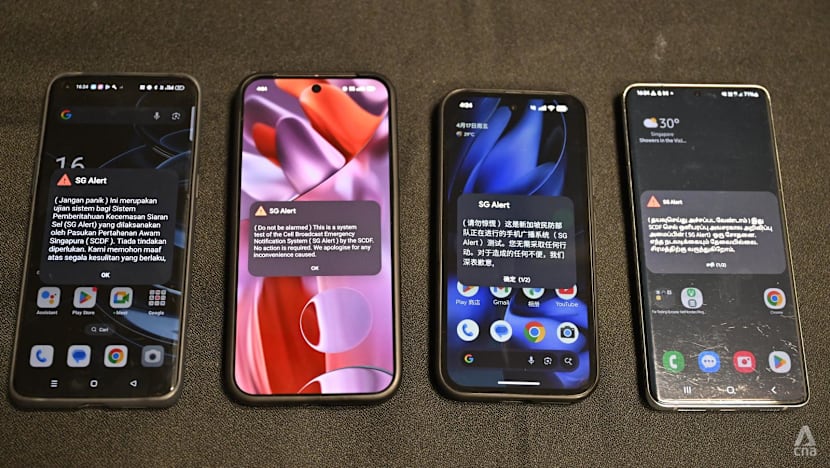
SCDF said the new emergency alert system boosts its capability to send alerts quickly during time-sensitive and life-threatening emergencies, allowing the public to respond immediately when every second matters.
"In emergencies, prompt and timely communication with the public is critical," added Senior Assistant Commissioner Alan Chow, senior director of SCDF's operations department.
"By strengthening our ability to reach the public swiftly and reliably, we enhance community preparedness and Singapore's overall emergency response capability," he said.
HTX's director for the civil defence programme management centre Pauline Ng noted that the agency designed the system specifically for SCDF's operational requirements to deliver messages rapidly in times of crisis.
"This shows our continued efforts to strengthen Singapore's emergency communications capabilities through technology adoption," she added.
The roll-out of the SG Alert comes after about two years of work, which involved a lot of planning and discussions including with the four telcos, said Ms Ng.
She noted that one of the main challenges her team faced was customising the alert messages to the four main languages.
Other places around the world have also been making the shift towards cell broadcast technology for emergency alerts.
Japan uses its early warning system J-Alert to notify the public on earthquakes, tsunamis and missile incidents. In South Korea, the Korean Public Alert Service system sends real-time, location-based emergency text messages to mobile phones for disasters, weather and safety risks.
Meanwhile, Australia will be rolling out its national emergency warning system, AusAlert, later this year to warn the public on natural disasters, threats to public safety as well as biosecurity and health threats.


