




Paragon’s medical suites, Orchard Road location key factors in S$3.9 billion sale: Analysts
With a third of Paragon’s lettable floor space for office and medical tenants, the mall is a more resilient asset compared with other retail offerings, said property experts.
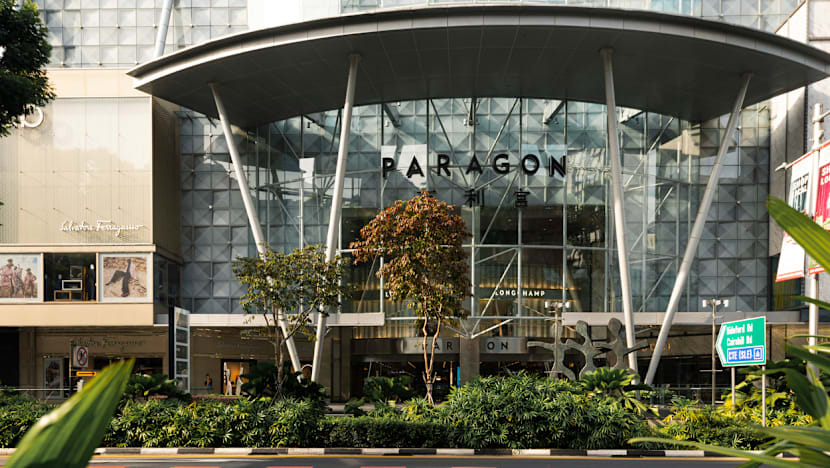
The Paragon along Orchard Road. (Photo: iStock)

This audio is generated by an AI tool.


SINGAPORE: Paragon’s medical suites and its position as a luxury mall along Orchard Road contributed to its high valuation, property analysts said.
CapitaLand Integrated Commercial Trust (CICT) announced on Monday (Apr 20) that it will acquire Paragon for S$3.9 billion from Cuscaden Peak, whose shareholders include Singapore state investor Temasek.
The trust also agreed to sell Asia Square Tower 2, a commercial development in the Marina Bay precinct, to Malaysia's IOI Properties for S$2.48 billion.
“Paragon has long positioned itself as a luxury shopping destination, and its own materials highlight international brands,� said Professor Lee Kwan Ok, from the real estate department with the National University of Singapore’s business school.





“That premium identity has been built over decades, which matters because luxury clustering tends to be self-reinforcing: once a mall reaches that level of brand positioning, it becomes much easier to sustain image, tenant demand, and pricing power.�
Globally, undifferentiated retail is under pressure, but prime, experience-led destination assets in “tightly held urban locations� remain highly valuable, said Prof Lee.
“Paragon sits in the heart of Orchard Road and is explicitly positioned as a premier freehold integrated development, so the market is valuing it very differently from a generic mall,� he added.
The freehold development, which comprises retail, office and medical suites, has 714,915 square feet of net lettable area. Both its retail and office or medical components were fully occupied as of Jan 31.
The acquisition will be funded through a combination of debt, a S$600 million private placement and proceeds from the sale of Asia Square Tower 2.

MEDICAL SUITES
About a third of Paragon’s net lettable area is its medical and office components.
The medical component is a key differentiator and likely a significant contributor to Paragon’s overall valuation, said head of research and data analytics at Singapore Realtors Inc (SRI) Mohan Sandrasegeran.
The demand for these spaces is anchored by essential healthcare needs rather than discretionary spending, he said, adding that the supply remains relatively limited, especially in prime central locations.
Paragon also benefits from its proximity to the Mount Elizabeth medical cluster, said Mr Desmond Sim, Group CEO of Realion Group.
Paragon’s clients who go for medical appointments would also spend some time shopping there, he said, noting that the mall has already established itself as an iconic place for medical treatments.
Patients and accompanying family members contribute to footfall and spending within the wider development, supporting retail performance indirectly, said Prof Lee.
While the medical and office component has a lower headline yield at 3.4 per cent compared to the retail component at 4.1 per cent, it adds stability and diversification to the income profile, he added.
In making the announcement, CICT’s chief executive Tan Choon Siang said the acquisition of Paragon would strengthen the trust’s portfolio, noting a “defensive medical component�.
The medical component is supported by strong structural tailwinds such as an ageing population and rising medical tourism, he said.
Referencing these tailwinds, Prof Lee said this means investors are pricing in not just retail cash flow, but healthcare-linked demand, which is likely to be more durable over time.
“Medical space is also inherently sticky,� he said, adding that Paragon houses more than 90 medical services in the towers above the retail podium.
“Those tenants face high relocation costs, and they benefit from specialist clustering and patient familiarity with the location. That makes the asset more resilient than a pure retail play.�
Paragon has built a strong medical ecosystem over time, and these factors give it a “defensible niche that is difficult to replicate� elsewhere in the city, said Dr Lynda Wee, an adjunct associate professor at Nanyang Technological University’s business school.
Medical and office uses significantly stabilise cash flows and enhance a property’s valuation, she added.
“Healthcare tenants such as specialist clinics, rehabilitation centres and training facilities typically have longer leases and lower cyclicality than retail tenants,� said Dr Wee.
They generate consistent weekday traffic, which supports complementary uses like dining and wellness services, she added.
Listen:
ORCHARD ROAD LUXURY
The acquisition will further consolidate CICT’s retail presence in the downtown precinct, said the company in a statement on Monday.
It currently runs ION Orchard, Plaza Singapura, The Atrium@Orchard, Raffles City Singapore and Funan, from Orchard Road MRT station through Somerset, Dhoby Ghaut and City Hall MRT stations.
The S$3.9 billion deal is one of the biggest deals for a commercial property in the last five years, said Mr Sim, describing Paragon as the cream of the crop.
Paragon’s clientele is also the reason why it has managed to become the luxury brand anchor along Orchard Road, he added, noting that the other mall that has successfully done so is ION Orchard.
Describing the deal as a strategic move by Capitaland to add a strong retail mall to its portfolio, Mr Sim noted that CICT’s current retail offerings include ION Orchard, Bugis Junction and other neighbourhood malls such as Westgate, Junction 8, Lot One Shoppers’ Mall and Bedok Mall.
Plaza Singapura, The Atrium@Orchard, Funan and Raffles City Singapore are listed as integrated developments on CICT’s website.
Paragon benefits from proximity to both Orchard and Somerset MRT stations, which gives it visibility, accessibility and catchment depth, said Prof Lee.
These sustain premium rents and long-term investment confidence, he said, adding that the freehold tenure adds a layer of scarcity that most prime Orchard assets do not have.
“What makes Paragon especially attractive is that it offers immediate scale and immediate market position. It would be extraordinarily difficult today to assemble and recreate a comparable freehold asset of this size in Orchard Road,� said Prof Lee.
“For an institutional owner like CICT, this is not just an acquisition of space; it is an acquisition of strategic presence in one of Singapore’s most important commercial corridors.�
Paragon’s rectangular floor plates allow for high net lettable efficiency and easier reconfiguration, which would be critical for the mall to reposition itself in the future, said Dr Wee.
With Singapore soon becoming a super-aged society, the mall is well-positioned to refresh and expand services around healthcare, wellness and active ageing, she added.
It could evolve into an "one-stop ecosystem", she said.


FULL OCCUPANCY
Analysts also noted that Paragon is currently operating at full committed occupancy across both segments.
This reflects sustained tenant demand and the mall’s ability to attract and retain a strong mix of occupiers across different uses, said Mr Sandrasegeran.
“The retail component benefits from a curated mix of international brands and lifestyle offerings, while the medical and office segment is supported by more stable, needs-based demand. Together, this diversified tenant base helps to smooth income volatility across market cycles,� he added.
As an asset, Paragon offers a high degree of income visibility, supported by consistent rental streams and limited vacancy risk, he said, noting that this stability is particularly attractive to investors.
Since the agreed value of S$3.9 billion is closely aligned with the two valuations by Knight Frank and Cushman & Wakefield at S$3.895 billion and S$3.905 billion respectively, the price appears to be “anchored to market fundamentals�.
“Overall, while the headline figure is sizeable, it reflects a combination of rarity, prime location, asset quality and income resilience.�
Investors buy commercial developments for two reasons – stability or to add value. For example, some investors may buy a mall with 80 per cent occupancy with plans to increase occupancy rates to earn their premiums, said Mr Sim.
In the case of Paragon, which has 100 per cent occupancy across its components, investing is a “stable call�, he added.
“That means I do not need to do anything, with my portfolio in CapitaLand, I’m confident that if it falls to 99 per cent, I can easily rack it up to 100 per cent,� said Mr Sim, noting that rental growth would be what brings value to investors.
Since CICT owns many malls and has a lot of experience, it likely has a pipeline of clients and can offer stability as a landlord. The company will be confident that other retailers will step in should tenants leave, he added.



