analysis East Asia
Why President Xi’s potential North Korea visit carries strategic weight for China and beyond
A potential state visit by Chinese President Xi Jinping to Pyongyang reportedly soon would mark his first overseas trip of the year and reinforce Beijing’s influence as North Korea-Russia ties deepen amid global tensions, analysts say.

This audio is generated by an AI tool.


BEIJING: Is Chinese President Xi Jinping set to make a state visit to North Korea soon? This prospect has surfaced in recent days, following media reports and sightings of a Chinese delegation in Pyongyang, and attracted international scrutiny over its timing.
First, the trip could be the Chinese supremo’s first publicly confirmed overseas trip of 2026, therefore giving the choice of destination added significance.
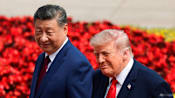
It will also come shortly after Xi’s recent meetings with both United States President Donald Trump and Russian President Vladimir Putin this month, both of which thrust Pyongyang back in the diplomatic frame in different ways.
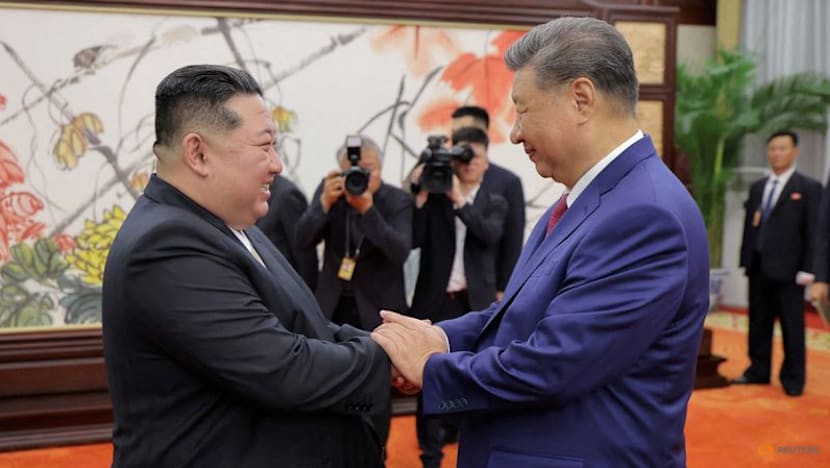
Third, such a trip would come shortly after Kim visited China only last September to attend a military parade that marked the 80th anniversary of the end of World War II, during which he met with Xi.





Xi himself last visited North Korea in 2019, where he met with North Korean leader Kim Jong Un and received full military honours, underscoring the political importance Pyongyang attached to the visit.
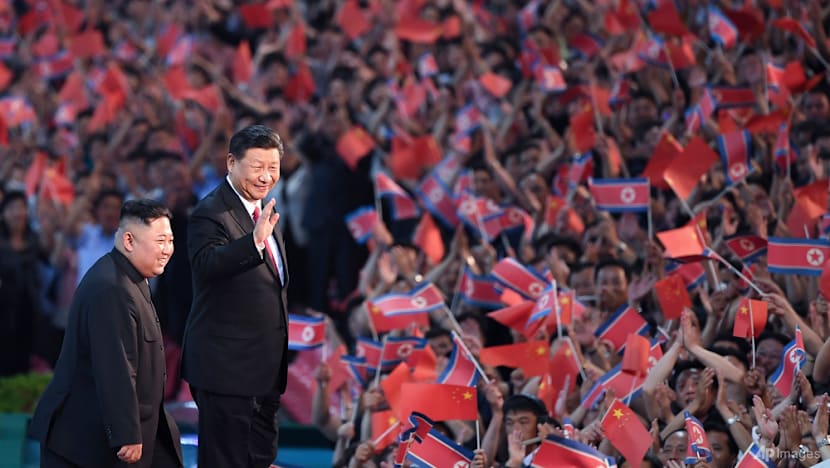
Analysts say Xi’s visit to Pyongyang would signal Beijing’s intent to recalibrate influence over North Korea and the wider Korean Peninsula.
Hao Nan, Korean Peninsula Specialist Fellow with the New York-based National Committee on American Foreign Policy (NCAFP), told ²ÝÝ®´«Ã½ that the potential visit would also show China remains “indispensableâ€� to managing Northeast Asian security.
“(China) wants to signal to (South Korea, Japan, Russia and the US) that North Korea remains within its strategic orbit, even as Russia-North Korea ties deepen,� he added.
At the same time, he said Beijing will “try to reassure Pyongyang, warn Washington and its allies� while avoiding “an explicit declaration of a China-North Korea-Russia axis�.
A TRIP THAT CARRIES SYMBOLIC WEIGHT
According to a TIME report published on May 20, citing unnamed sources, Xi was expected to pay a state visit to North Korea as early as the final week of May.
The report cited one source briefed on the arrangements as saying China and North Korea would “coordinate more against the new militarism of Japan�, amid Beijing’s concerns over Japan’s security posture under Prime Minister Sanae Takaichi.
Separately, South Korea's Yonhap News Agency reported, citing unnamed government sources, that Xi could visit North Korea in late May or early June.
A source also said that a team of Chinese security and protocol officials had recently been in Pyongyang, suggesting preparations for a possible Xi visit.
But China has remained tight-lipped about Xi’s potential state visit to North Korea.
When asked about Xi’s trip on Monday (May 25), Beijing foreign ministry spokesperson Mao Ning said she had “no information� to offer - only reiterating that “China and the (Democratic People's Republic of Korea) are friendly socialist neighbours� whose long-running exchanges served both sides’ interests and regional peace and stability.
A report by NK News on May 26 looking at satellite imagery showed no preparations at Kim Il Sung Square as of May 24. Major welcome ceremonies are held for visiting foreign leaders at the site.
But the groundwork appears to be in place, said Hao, citing an earlier visit to Pyongyang by Chinese Foreign Minister Wang Yi in April - although he remains cautious about the timing - saying that a visit might not necessarily take place in the coming days.
Kim’s most recent visit to China took place in September 2025, when he travelled to Beijing by his signature armoured train to attend Victory Day commemorations and joined Xi and Putin at a military parade in Tiananmen Square.
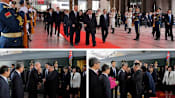
Xi’s first overseas trips in recent years have often carried diplomatic signals.
In 2023, Xi chose Moscow as his first foreign trip after being re-elected as Chinese president.
In 2024, he began overseas travel to Europe, with stops in France, Serbia and Hungary.
In 2025, he travelled to Southeast Asia, visiting Vietnam, Malaysia and Cambodia.
If North Korea becomes his first foreign destination this year, it would stand out as a pointed choice, experts said.
Lim Tai Wei, an East Asian affairs observer and professor at Soka University in Tokyo, said any trip would carry added significance because Xi would be making it at a time when he has not been travelling abroad.
“North Korea is China’s only official ally,� Lim said, adding that such a visit would carry “symbolic importance� in Northeast Asia’s high-context political culture.
RECALIBRATING TIES
The challenge for Beijing is not simply whether North Korea is close to China, but how close it moves to Russia - and whether that leaves China with less room to shape Pyongyang’s choices, analysts said.
Russia-North Korea ties have deepened sharply since Putin and Kim signed a comprehensive strategic partnership treaty in Pyongyang in June 2024 - pledging military and other assistance if either side is attacked.
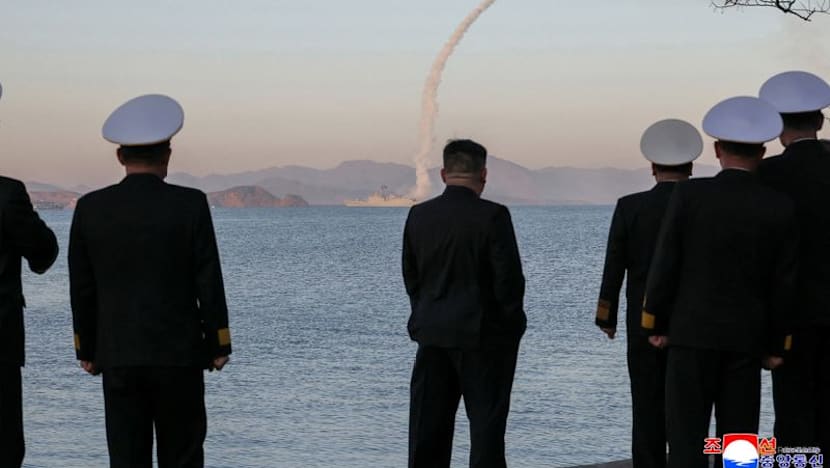
North Korea has also sent troops and weapons to support Russia’s war against Ukraine, while both sides have moved to expand transport and economic links across their shared border.
China does not necessarily view deeper Russia-North Korea ties primarily as a problem, given the strategic value of a loose counteralignment against tighter US-South Korea-Japan coordination, said NCAFP’s Hao.
But it also does not mean Beijing wants a formal bloc, he said.
“China does not want to formalise this into a rigid ‘axis’ because that would help Washington consolidate its alliances and accelerate Japan’s military normalisation and further constrain the US-China negotiation space,� Hao said.
For China, the issue is calibration, he added.
“North Korea should remain strategically useful, but not become uncontrollable or overly dependent on Moscow.�
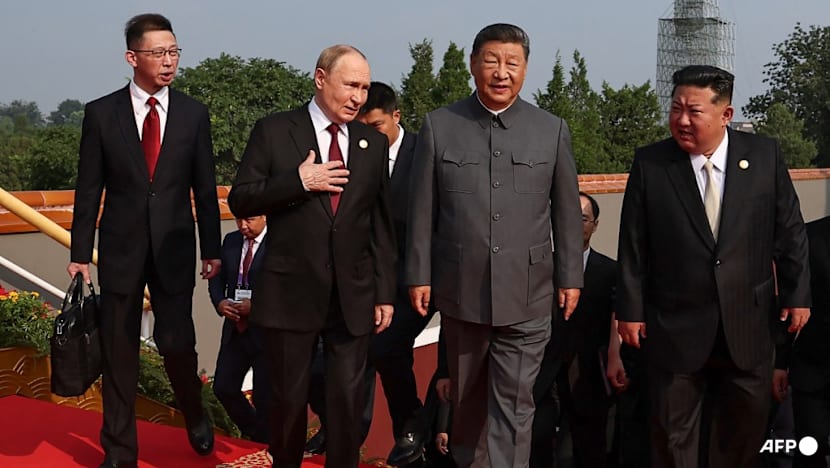
Given the risk of jeopardising economic ties with the West, China does not want to lead a Moscow-Beijing-Pyongyang axis or be seen doing so, said Howell from Oxford University.
But Beijing is still willing to work with Russia or North Korea where it sees benefits, he added.
“For China, stability on the Korean Peninsula - the status quo - is its utmost priority,� he said.
Lim from Soka University said Beijing’s calculus cuts both ways.
On one hand, China may not be keen to see Pyongyang become more deeply involved in Russia’s war in Ukraine, given Beijing’s desire to maintain stable relations with the EU, South Korea and the US, he said.
But China, Russia and North Korea are increasingly linked through overlapping security arrangements and strategic partnerships, Lim added, citing the Shanghai Cooperation Organisation, the China-North Korea alliance and what some in the West have informally called the “CRINK� alignment involving China, Russia, Iran and North Korea.
Such arrangements serve as “a bulwark against any perceived hostilities from the West�, he said.
THE WASHINGTON FACTOR
Beijing’s balancing act over North Korea’s deepening ties with Russia also matters for Washington, where Trump has repeatedly signalled interest in re-engaging Kim, experts said.
During his visit to Beijing earlier this month, Trump said relations with Kim were “very good� - according to NK News, adding to speculation over possible renewed US-North Korea engagement.
“Washington would probably not oppose a Xi visit in principle if it helps restrain Pyongyang and stabilise the Western Pacific,� Hao said.
“But it would worry if Xi’s visit visibly consolidates China-North Korea-Russia coordination, because that would increase US strategic pressure and alliance obligations toward Seoul and Tokyo.�
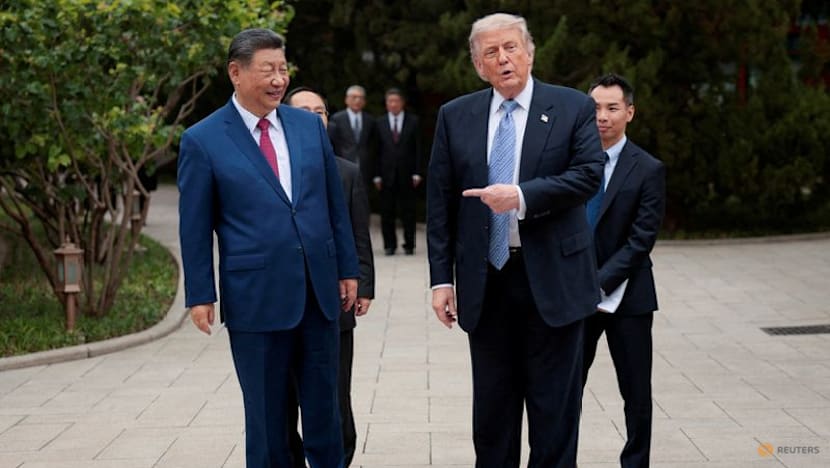
The US and its allies have long relied on sanctions to pressure North Korea over its nuclear and missile programmes, with Pyongyang subject to layers of UN Security Council sanctions as well as US-led restrictions.
But the sanctions regime has come under growing strain, particularly as military cooperation between North Korea and Russia expands, and as China and Russia oppose more pressure on Pyongyang.
Beijing wants to show that it still retains influence over the Korean Peninsula, said Edward Howell, an international relations lecturer at Oxford University and Korea Foundation Fellow at Chatham House, London.
It also wants to signal to the West that its relationship with Pyongyang remains on good terms, Howell said, even if individual interests do not always fully align.
China’s message is also that “sanctions and pressure on North Korea is, in Beijing’s eyes, not a good strategy�, he added.
The possibility of US-North Korea talks resuming “cannot be ruled out�, said Howell - though it remains less clear whether Xi will play any meaningful mediation role between Washington and Pyongyang.
For Kim, the bar for any renewed engagement remains high, he added, noting that Pyongyang has made clear any talks with Washington would have to start with acceptance of its nuclear status, while US policy still formally rests on denuclearisation.
Even so, Kim is unlikely to lose much from talking to Trump, Howell said. “After all, he can gain domestic and international status whilst giving away little-to-no concessions,� he added.
If Kim could gain some form of tacit acceptance of North Korea’s self-declared nuclear status, Pyongyang would be able to frame any Trump-Kim talks as a victory, Howell added.
A visit from Xi would also strengthen his hand beyond any potential talks with Washington, Hao said.
Hosting Xi would elevate Kim’s domestic prestige and help present North Korea not as an isolated state, but as one courted by major powers, he noted.
It would also signal that Pyongyang is “not merely Russia’s junior partner, but a strategic hinge between Beijing and Moscow�.
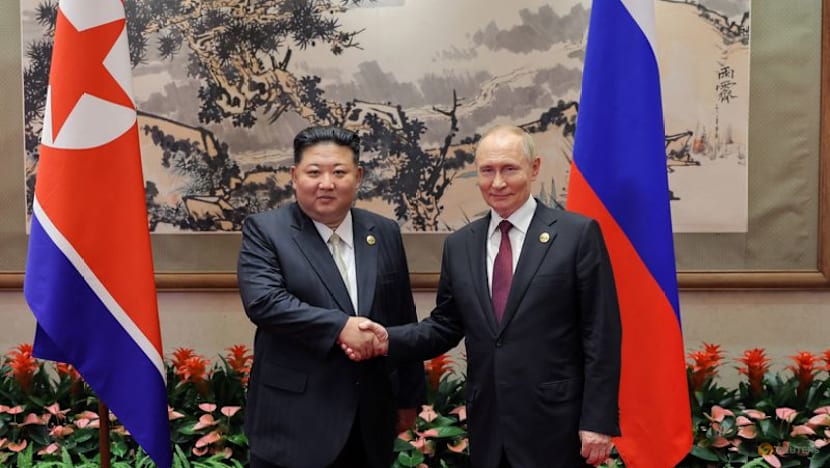
Economically, deeper China-Russia-North Korea border cooperation would also matter to Pyongyang, particularly around the Tumen River Delta, where “Chinese capital, technology and market access remain irreplaceable�, Hao added.
“Russia gives North Korea strategic oxygen, but China offers economic scale,� he said.
DELICATE BALANCING ACT
The next test, analysts said, will be whether a Xi visit lowers tensions on the Korean Peninsula or adds another layer of uncertainty.
“The likely outcome is managed stability without diplomatic breakthrough,� Hao said.
Under current South Korean President Lee Jae Myung, South Korea may act as “a brake on escalation rather than simply an accelerator of bloc confrontation,� he said.
“Lee’s government, as seen in its approach so far, is likely to preserve room for pragmatic engagement and crisis management,� Hao added.
Japan, however, is likely to read a Xi visit to North Korea through a sharper security lens, given Tokyo’s concerns over North Korean missiles, nuclear threats and any sign of closer China-North Korea-Russia coordination, analysts said.
Hao said Tokyo would likely use such a visit to justify stronger US-Japan coordination and military normalisation, while South Korea’s response would be more nuanced.
The visit would also sharpen concerns in Seoul, Tokyo and Washington about North Korea’s cooperation with China and Russia, said Howell - at a time when the US and its allies already face “a growing number of interconnected threats from adversarial actors�, he added.

If the Xi trip happens, official statements about it may matter as much as the optics, analysts said.
Hao said these should be read less for dramatic language than for what Beijing “omits, downgrades or carefully preserves�.
The key word is “denuclearisation�, he said. If Pyongyang accepts a Xi visit, it would suggest Beijing has reassured Kim that denuclearisation will not be the central agenda or a public demand, even if China keeps standard language on political settlement.
Wording will also matter because “denuclearisation of North Korea� and “denuclearisation of the Korean Peninsula� carry different implications, said Howell - with the latter often linked to Pyongyang’s demand for changes to the US military posture in South Korea.
Other signals to watch include whether readouts use routine language such as “strategic communication�, or stronger formulations such as “strategic coordination� and “joint response to regional changes�, Hao said.
References to Tumen River cooperation or Northeast Asian connectivity would point to practical three-way cooperation without declaring an axis, he added, while criticism of US extended deterrence, missile defence, strategic assets or trilateral military coordination would send a harder bloc message.
For Howell, the longer-term challenge is whether Washington and its allies can loosen those links.
“North Korea, in my view, is never going to abandon its nuclear weapons completely, what the regime calls its 'treasured sword',� he said.
“But if the West can work out how to break the links between North Korea and China, or North Korea and Russia, then this gargantuan challenge is one that Seoul, Tokyo, and Washington must face.�