Malaysia ramps up border crackdown on subsidised fuel, controlled goods as energy crunch bites
“Even small leakages effectively become a transfer of public funds beyond Malaysia’s borders,� says an economist.
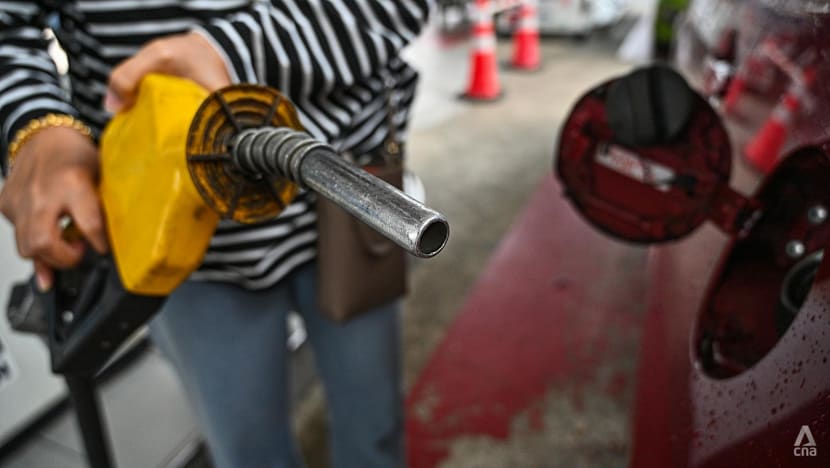
A woman refuels her car at a petrol station in Johor Bahru, Johor, on Apr 8, 2026. (Photo: ²ÝÝ®´«Ã½/Zamzahuri Abas)

This audio is generated by an AI tool.

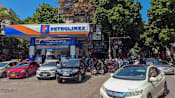
JOHOR BAHRU: Just 200m from the Woodlands Causeway, the mood at a Shell station in Johor Bahru is taut.
Pump attendants linger, watchful as Singapore-registered cars pull in. Their eyes follow every move of the drivers, as they lift the nozzle to their tanks before clicking back into place.
The concern is not just what goes into vehicles, but what might leave in portable containers.
“We’ve had more checks recently,� said the station’s manager, who declined to be named. “Officers are coming down more often to make sure we comply (with regulations).�
She was referring to enforcement officers from the Ministry of Domestic Trade and Cost of Living (KPDN), who she said now show up almost weekly, sometimes in plain clothes.
“We may not recognise them at first, but we stay alert. Compliance is very important, especially now,� she added.
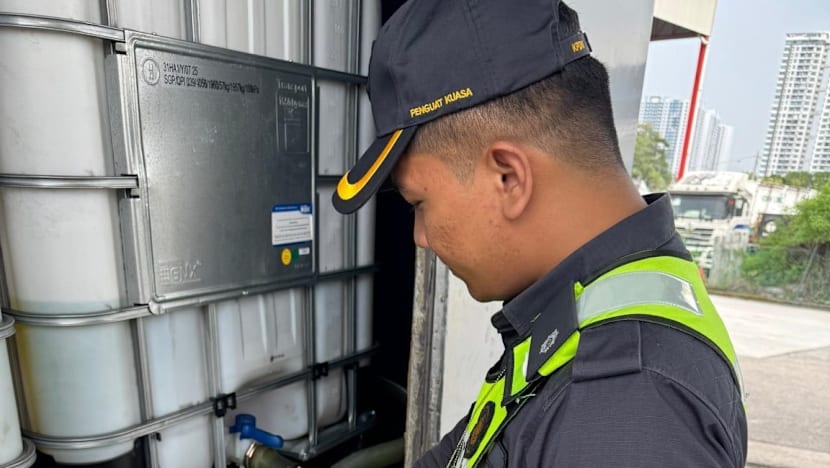
Malaysia has long banned the sale of subsidised RON95 petrol to foreign-registered vehicles - a rule in place since 2010 to ensure public funds benefit Malaysians. The fuel is priced at RM1.99 (US$0.50) per litre for eligible citizens.
Breaches come at a steep cost for petrol kiosk operators as well as sellers of subsidised items who flout the rules. These businesses risk fines of up to RM1 million for a first offence, and up to RM3 million, jail time, or both for repeat violations. Customers who purchase these are not penalised under current laws.
But enforcement has sharpened in recent months as global energy markets tighten.
Oil prices have surged past US$100 per barrel amid Middle East tensions and supply disruptions, pushing up the cost of maintaining Malaysia’s fuel subsidies and raising the stakes of any leakage.
But prices decreased slightly after the United States and Iran agreed to a temporary ceasefire, with the most widely traded oil contracts falling to around US$95 per barrel on Wednesday (Apr 8). Prices rebounded on Apr 9 and climbed to over US$98 per barrel as the Strait of Hormuz remains largely blocked and Israeli attacks on Lebanon threatened to derail the already fragile ceasefire.
Still, that figure is well above the levels seen for most of the past two years, when prices generally hovered between US$70 and US$85.
Before the conflict in Iran began, subsidised RON95 in Malaysia was priced at RM1.99. In Singapore, the 95-octane equivalent was roughly RM9 per litre while in Thailand gasohol 95 equivalent costs RM4.50 per litre.
Meanwhile according to a comparative table published by Bernama on Apr 9, RON95 in Malaysia is kept at the same price for locals who qualify. But in Singapore, the 95-octane equivalent now costs roughly RM10.81 per litre and in Thailand gasohol 95 equivalent costs RM5.45 per litre.
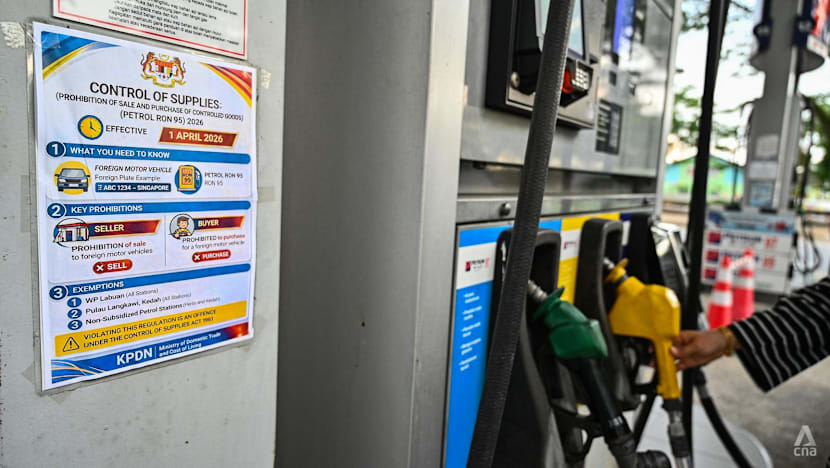
Malaysian authorities are increasingly concerned about subsidised fuel slipping across borders - whether pumped into foreign vehicles or siphoned into containers for resale.
In response, checks have intensified in areas near land international borders including Johor, Kelantan and Kedah, targeting not just petrol but a wider list of controlled goods vulnerable to cross-border arbitrage.
These items include household goods like sugar, flour, cooking oil, chicken and bread.
Controlled items listed by Malaysia
The list of scheduled controlled items identified by Malaysia’s Ministry of Domestic Trade and Cost of Living (KPDN) are sugar, wheat flour, cooking oil, fertiliser, petrol, diesel, chicken, bread, cement, kerosene, mild steel round bars as well as liquefied petroleum gas.
The government sets a price ceiling for these goods and monitors supply to avoid shortages.
They are only sold at premises with a licence to sell scheduled controlled items (CSA).
The limits vary depending on each item.
For RON95 petrol for instance, the quota for the subsidised fuel priced at RM1.99 per litre is currently limited to 200 litres a month. This is a reduction from 300 litres previously due to the deepening energy crisis sparked by the Middle East conflict. Malaysians can obtain this by registering for the BUDI95 programme and scanning their ID card at the pump or cashier at petrol kiosks to access it.
The BUDI95 programme was introduced at the end of September last year to ensure that RON95 petrol subsidies benefit only eligible Malaysians, while curbing leakages to foreigners and commercial entities.
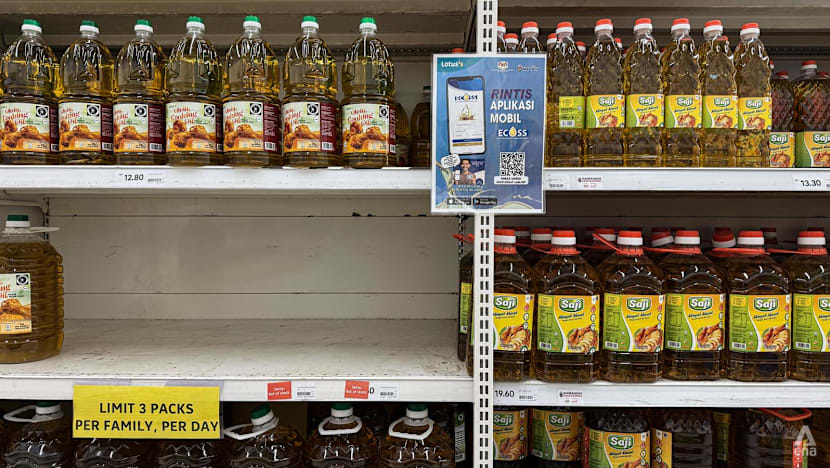
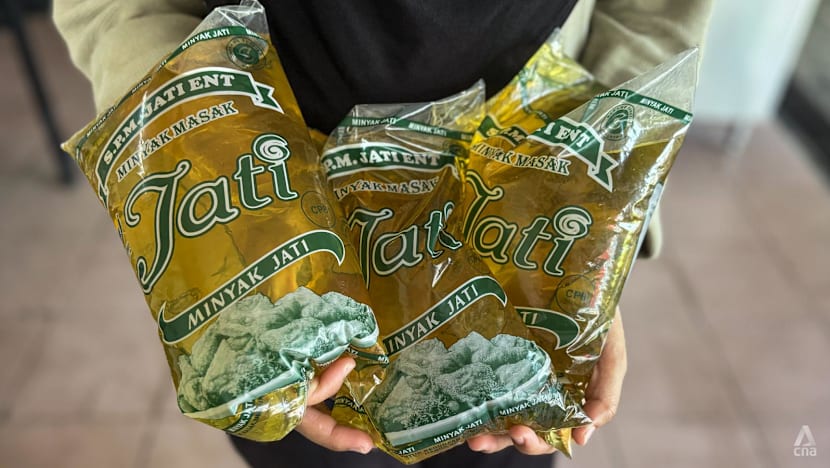
Meanwhile for cooking oil, Malaysians can purchase subsidised 1kg cooking oil packets priced at RM2.50 by registering under the eCOSS (Cooking Oil Price Stabilisation Scheme System) app where they are required to scan sellers code during purchase to curb leakages. These polybag packets are sold at some supermarkets.
Businesses in Johor Bahru say the scrutiny is palpable: more frequent and thorough spot checks.
Still, a reported ceasefire in the Middle East has brought a measure of relief, with hopes that calmer markets will temper demand pressures and steady consumer behaviour.
The stakes are particularly high in Johor, said economist Sedek Jantan, as many visitors from Singapore cross the border to shop for household items and fill up petrol, to benefit from the reduced costs.
“With its proximity to Singapore, Johor sits along one of the region’s busiest cross-border corridors,� he noted. “At that scale, even small leakages effectively become a transfer of public funds beyond Malaysia’s borders.�
CUSTOMERS, BUSINESSES BRACE FOR MORE SCRUTINY
There have been local reports citing KPDN’s success at foiling attempts to smuggle or stockpile petrol.
Late last month, the ministry’s Johor division halted an attempt to steal 800 litres of diesel at a Petron petrol kiosk in Pasir Gudang, a haul worth more than RM20,000.
More recently, Malaysia’s border control and protection agency (AKPS) detained a Thai soldier at the Bukit Kayu Hitam border checkpoint in Kedah on suspicion of attempting to smuggle petrol out of the country.
A Thai outlet also reported that authorities in southern Thailand are investigating a Malaysian-owned logistics company after around 100,000 litres of diesel were found stored on its premises in Sadao district.
KPDN Minister Armizan Mohd Ali was recently quoted by local Malaysian media as saying that authorities will be stepping up enforcement operations at the land borders, including at petrol kiosks near the borders to curb leakages.
Sedek told ²ÝÝ®´«Ã½ that the price disparity between the prices of petrol in Malaysia as compared to Thailand and Singapore have become “structurally significant and economically consequentialâ€�.
He noted that Malaysia’s RON97, at approximately RM4.95, remains markedly cheaper than Benzine 95 in Thailand at roughly 43.95 baht (RM5.46) and substantially below prices in Singapore, where premium platinum 98 fuel is priced around S$4.00 (RM12.50).
“These are not marginal differences but deep and persistent price distortions that effectively convert fuel into a cross-border arbitrage asset,� added Sedek.
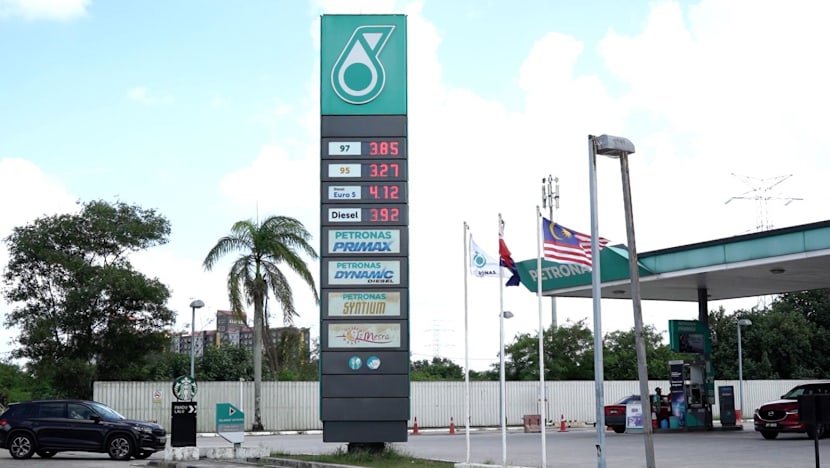
In Johor, businesses which sell petrol as well as controlled household items told ²ÝÝ®´«Ã½ that there have been more frequent and intense enforcement checks from KPDN officers to ensure they do not artificially raise prices of these goods or permit customers to stockpile them.
Teh Kee Sin, who is the adviser of the Small and Medium Enterprise (SME) Association of South Johor, told ²ÝÝ®´«Ã½: “Enforcement operations are not like routine checks done previously; they are more intense, frequent and targeted at businesses popular with Singaporeans near the border.â€�
Teh said that previously the checks were done once or twice a year, but he noted that some small businesses have recently been the subject of checks weekly.
Ten Moley, a cashier at a mini grocer Shiva Shastha Cash and Carry which sells controlled goods like flour and cooking oil, told ²ÝÝ®´«Ã½ that there have been more customers purchasing these items, but she maintained that they have been within the limit set by KPDN.
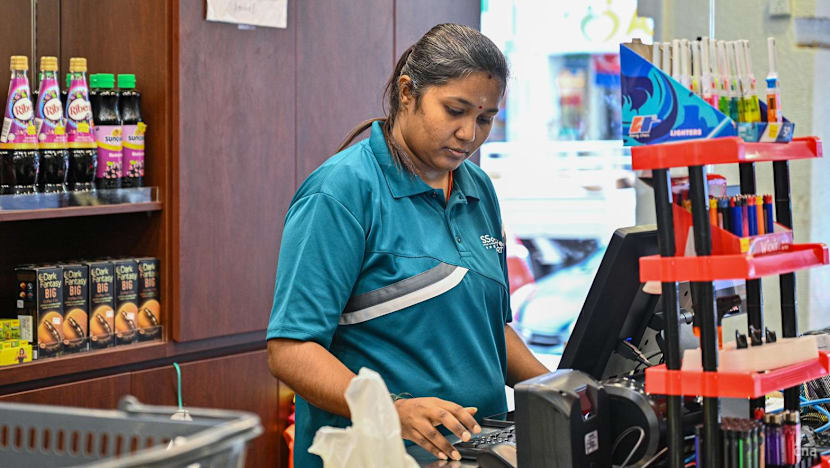
“We cannot hike our prices as we like, the (prices of these) controlled items are set by the government and we do not make much profit,� said the 36-year-old.
Shopping Lee, a store manager of a minimart in Taman Pelangi located about a 10-minute drive from the Causeway, told ²ÝÝ®´«Ã½ that there has been an increase in demand for some key household items recently like oil and flour. This has led to her placing an order for those items with her suppliers.
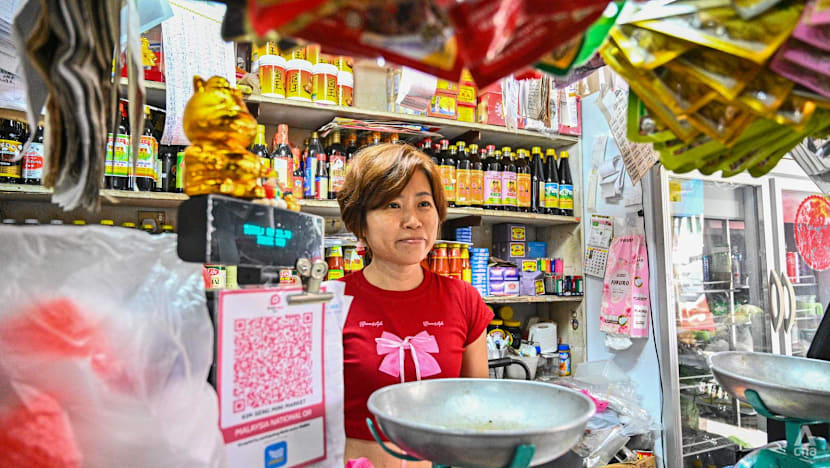
“(But) there is currently a shortage for flour and we have requested for more stock but they are not able to deliver. Hopefully this does not extend to other items,� she added.
²ÝÝ®´«Ã½ has reached out to Malaysia’s Ministry of Agriculture and Food Security on if there are shortages on flour or any of the other controlled items.
Meanwhile, Teh said that overall, there have not been rampant cases of either Singapore or Malaysian customers stockpiling petrol or groceries.
However, he outlined that some small businesses, grocers or petrol stations may not have enough resources to monitor every single customer that passes through their premises.
“The enforcement should be driven by authorities and would be good (if punishment) is passed over to the errant customer as well,â€� he told ²ÝÝ®´«Ã½.
Singaporeans who travel to Johor Bahru frequently to shop for household items and pump petrol for their vehicle told ²ÝÝ®´«Ã½ that they are keen to adhere to the regulations spelled out by the Malaysia government.
Singaporean Chan Qing Hao, 26, who drove out of Johor back to Singapore on Apr 4 told ²ÝÝ®´«Ã½ that he noticed tighter checks at petrol stations to prevent fuel abuse.
“(Malaysia’s) RON97 is already a lot cheaper than RON95 (in Singapore). There’s no reason to buy their … subsidied petrol and then risk getting into a conflict with everyone,� he said.
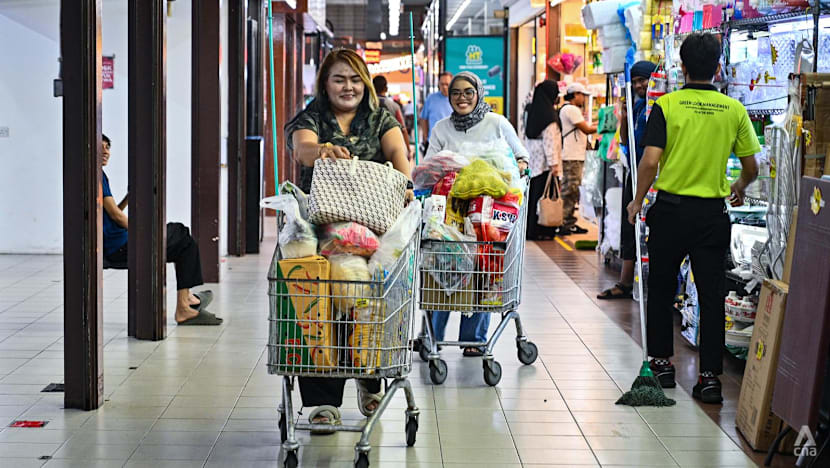
However, given the possibility of petrol shortage, Malaysia-based economist Shankaran Nambiar maintained that Putrajaya must prioritise the needs of its own citizens.
“The price of RON97 in Singapore is almost double that in Malaysia. This makes it worth the while (for Singaporean drivers) to take a drive and fill the tank in Johor,� said Nambiar.
“The problem comes when anxiety mount … given limited reserves it is important that Malaysia serve the needs of its own citizens first,� he added.
Singaporean Ann Ong, 55, who travels to Johor monthly with her friend for cheaper facials, said she usually buys unsubsidised items like eggs from supermarkets including Lotus and Jaya Grocer, but has not noticed nor bought any subsidised ones.
Malaysia stopped subsidising chicken eggs in August 2025, a move which was expected to save RM1.2 billion annually, reported local news outlets.
Ong, who is in between jobs, said that a tray of 30 eggs, though unsubsidised, costs about RM12, less than half the price in Singapore where the same tray ranges about S$7 to S$14.
“I don’t think the change will affect me because I don’t buy subsidised items,� she said.
“But if grocery prices here (in Singapore) become more expensive because of the war, it would make me want to go to Malaysia to buy. But I won’t buy the ones I’m not supposed to.�
Malaysian Prime Minister Anwar Ibrahim on Apr 5 outlined that Malaysia was currently spending RM6 billion a month on subsidies for petrol, diesel and related assistance. However, he noted that the government had recovered RM15.5 billion from financial leakages over the past two years.
“We must identify where the leakages occurred and ensure they are stopped,� he added.
The economist Sedek maintained that border enforcement was the “most direct and efficient way to contain leakages� and to preservice the system’s integrity.
“If enforcement fails at the border, the sustainability of the pricing system itself comes into question. Tightening control at land borders is ultimately a targeted and necessary response to maintain fiscal discipline and ensure that subsidies continue to benefit domestic users under sustained external demand pressures,â€� he told ²ÝÝ®´«Ã½.
CEASEFIRE TRIGGERS OPTIMISM
Additionally, economists added that a two-week ceasefire between US and Iran could spell positive news for many countries and the restoring of supply chains for many key items - including crude oil.
As part of the terms of the ceasefire, the US will suspend attacks on Iran for two weeks and Tehran will in turn temporarily reopen the Strait of Hormuz.
The development caused the prices of crude oil to plunge and stocks to surge.
Moley, the minimart cashier, expressed hope that news of the ceasefire would persuade customers to take a step back in stockpiling and hoarding controlled items.
“I hope they don’t buy in bulk as much anymore,� she said.
Teh of SME Johor, however, warned that it would take some time for supply chains to resume and normalise, and this is provided the ceasefire holds.
“I’m thankful that the situation has not spiralled and worsened like it did during COVID-19. Yes many businesses have seen their cost of operations increase and the outcome is still uncertain, but hopefully with the Straits of Hormuz (set to) open, things will improve,� he said.
Additional reporting by Savanna Tai