




Beyond borders: Gamuda Land advances regional growth strategy to double earnings
Under new leadership, the Malaysian property developer is focusing on capital efficiency, quick turnaround projects and well-timed launches to strengthen profits.
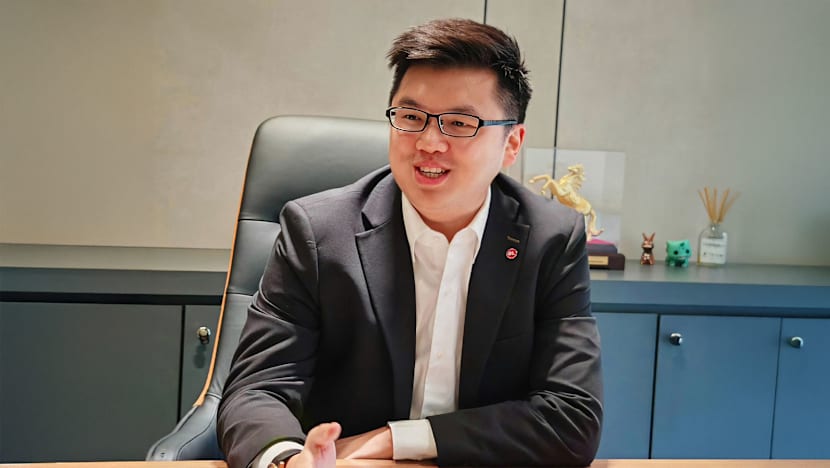
Gamuda Land’s new CEO Gim Teck Yew has overseen township launches in Malaysia and driven the group’s expansion in Vietnam. (Photo: Gamuda Land)

This audio is generated by an AI tool.


Brought to you by
From central London to Klang Valley, and across Vietnam, Singapore and Australia, Gamuda Land is expanding its presence across markets with different growth profiles as it positions itself for its next phase of growth.
The developer’s portfolio exceeds RM110 billion (S$35.2 billion) in gross development value (GDV), spanning close to 40 developments across five countries. To date, it has delivered more than 60,000 homes across integrated townships, mixed-use developments and other asset classes.
Under its new CEO Gim Teck Yew, the company is refining its growth approach, balancing long-term township developments in Malaysia with shorter-cycle projects in overseas markets.
BALANCING GROWTH AND CAPITAL EFFICIENCY
Gamuda Land has reported a five-year compound annual growth rate of 13 per cent, with revenue rising 26 per cent year on year in 2025. Its development pipeline is expected to exceed RM10 billion over the next three years, with a focus on higher-yield, demand-driven projects.
A key driver of growth is its quick turnaround project (QTP) model. These mid-scale developments typically run on three- to five-year cycles, complementing township projects in Malaysia that can take between 10 and 20 years to complete. This approach allows the company to recycle capital more efficiently while managing exposure across different property cycles and geographies.
Mr Gim said disciplined site selection and execution are central to sustaining growth across its five active markets.

VIETNAM: KEY GROWTH DRIVER
Vietnam remains Gamuda Land’s core market, supported by nearly two decades of on-the-ground presence and established trust.
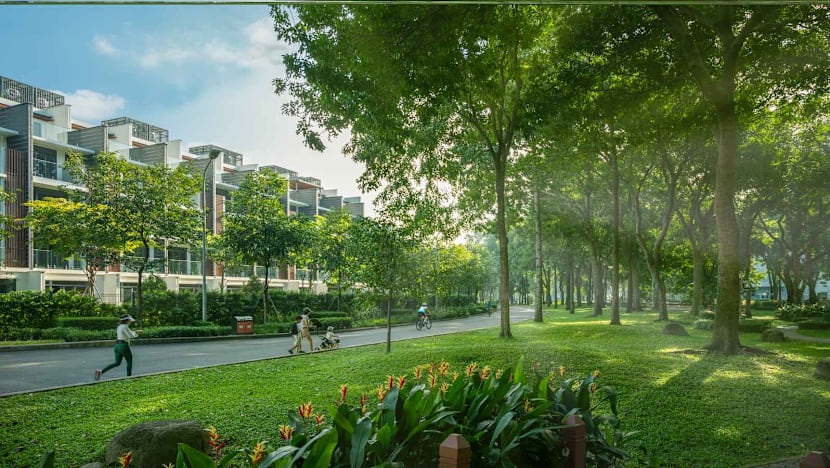
The company entered the market in 2007 through Gamuda City in Hanoi, anchored by the development of Yen So Sewage Treatment Plant and the transformation of Yen So Park into one of the city’s largest public parks. This was followed by Celadon City in Ho Chi Minh City in 2011. The fully sold township is regarded as a benchmark development in the market.
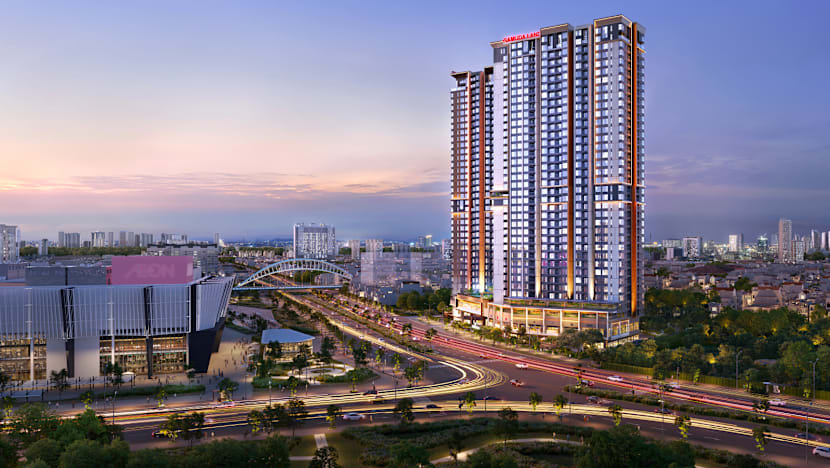
Today, Gamuda Land has projects across Vietnam’s three largest cities – Hanoi, Ho Chi Minh City and Hai Phong. It currently has 10 QTP developments in the country, bolstered by the recent acquisition of four new sites. Additional projects are in the pipeline. Upcoming launches this year include Ambience in Hai Phong and Central Park in Hanoi.
MALAYSIA: STEADY GROWTH FROM TOWNSHIPS AND PARTNERSHIPS
In Malaysia, Gamuda Land continues to advance its core townships in Klang Valley. Gamuda Gardens and Gamuda Cove are about 20 to 30 per cent of their development cycles. These projects are expected to support sustained value creation as they mature and continue to attract more commercial, retail and community partners.
More established developments such as Horizon Hills in Johor Bahru are nearing completion, with overall take-up rates exceeding 97 per cent, including higher-value landed homes.
A partnership-led model is central to Gamuda Land’s growth strategy, particularly in Malaysia, where collaboration has played a key role in value creation. Its joint venture with UEM Sunrise at Horizon Hills demonstrates how shared expertise and resources can enhance execution in a mature township environment, with strong take-up for homes priced above RM2 million.
Beyond residential developments, Gamuda Land’s collaboration with Taylor’s Education Group reflects a growing focus on education-anchored townships. Under its QTP model, the redevelopment of SS15 Subang Jaya, Selangor pairs purpose-built student accommodation with residential development in an established urban location.
Building on this, Gamuda Land is extending its partnership model across markets, exploring multi-party and cross-border collaborations to support scalable growth while leveraging local insights and complementary capabilities.
EXPANDING PRESENCE IN DEVELOPED MARKETS
Beyond Southeast Asia, Gamuda Land is building a presence in developed markets, particularly in the United Kingdom and Singapore.
In the UK, its focus is on income-generating assets. This includes purpose-built student accommodation projects in London and Glasgow, targeting supply-constrained university markets that offer stable and recurring income streams.
The company is also developing 75 London Wall, a Grade-A office project in the City of London valued at £1.2 billion (S$2.05 billion). It is expected to be completed in 2028 and is already attracting interest from global corporations.
In Singapore, Gamuda Land has maintained a decade-long presence through projects such as Gem Residences and Ola – both fully sold and occupied.
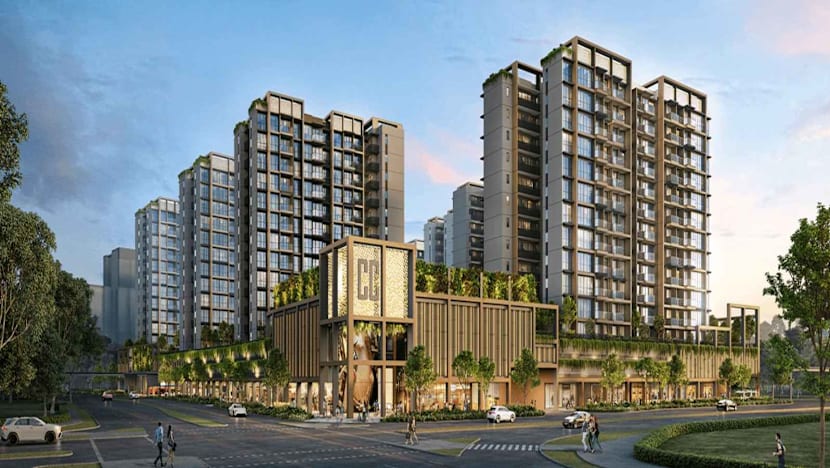
Its upcoming project, Chencharu Close, is a RM6.6 billion GDV mixed-use development. It will feature private residential units alongside commercial offerings, a food centre and an integrated bus depot, with direct connectivity to Khatib MRT station.
POSITIONED FOR LONG-TERM GROWTH
Over the next three years, Gamuda Land aims to maintain a balanced portfolio, with about 50 per cent of its GDV in Vietnam, 35 per cent in Malaysia and 15 per cent across Singapore, the UK and Australia. This diversification allows the company to capture high-growth opportunities while maintaining stability and building long-term value in developed markets.
“For a company operating across multiple markets, agility and discipline are critical,� said Mr Gim. “We continuously assess opportunities, manage risk and execute with clarity to deliver sustainable outcomes.�
As it scales its regional footprint, Gamuda Land is positioning itself as a capital-efficient platform with multiple pathways for growth – and as a partner for stakeholders seeking exposure to high-growth urban markets.
Find out more about and growth plans.


